

How are swabs sterilized?
Oct 15, 2025
Leave a message
Hey there! I'm a supplier of swabs, and today I'm gonna dive into the fascinating world of how swabs get sterilized. It's a crucial process that ensures the safety and reliability of these little tools we use in so many different fields, from medical testing to scientific research.
Why Sterilization Matters
First off, let's talk about why sterilizing swabs is such a big deal. Swabs are often used to collect samples from people's bodies or the environment. If they're not properly sterilized, they can carry all sorts of contaminants, like bacteria, viruses, or fungi. These contaminants can mess up test results or even cause infections in patients. So, getting the sterilization right is essential for accurate diagnoses and preventing the spread of diseases.
Common Sterilization Methods
There are several methods used to sterilize swabs, and each has its own pros and cons. Let's take a look at some of the most common ones.
1. Autoclaving
Autoclaving is like the old - school heavy - hitter of sterilization. It's a process that uses high - pressure steam to kill off any living organisms on the swabs. The swabs are placed in an autoclave, which is basically a big, fancy pressure cooker. Inside the autoclave, the temperature can reach up to 121°C (250°F) or even higher, and the high pressure helps the steam penetrate every nook and cranny of the swabs.
The great thing about autoclaving is that it's very effective. It can kill a wide range of bacteria, viruses, and spores. But it also has some drawbacks. Some materials used in swabs might not be able to withstand the high heat and pressure. For example, certain types of plastics can melt or warp, which can ruin the swab's structure and functionality.
2. Ethylene Oxide (EtO) Sterilization
Ethylene oxide is a gas that's really good at killing microorganisms. In EtO sterilization, the swabs are placed in a sealed chamber, and then ethylene oxide gas is pumped in. The gas penetrates the swabs and reacts with the DNA and proteins of any bacteria or viruses present, effectively killing them.

One of the advantages of EtO sterilization is that it can be used at lower temperatures compared to autoclaving. This means it's suitable for swabs made from heat - sensitive materials. However, ethylene oxide is a toxic and flammable gas, so special safety measures need to be taken during the process. After sterilization, the swabs also need to be aerated for a period of time to remove any residual ethylene oxide, which can be time - consuming.
3. Gamma Irradiation
Gamma irradiation uses high - energy gamma rays to sterilize swabs. The swabs are placed in a radiation chamber, and they're bombarded with gamma rays emitted from a radioactive source, usually cobalt - 60. The gamma rays damage the DNA and other vital components of microorganisms, preventing them from reproducing and eventually killing them.
Gamma irradiation is a very efficient method. It can sterilize a large number of swabs at once, and it doesn't require any chemicals. Also, it can penetrate packaging materials, so the swabs can be sterilized while already in their final packaging. But the equipment for gamma irradiation is expensive, and there are concerns about the potential effects of radiation on the swab materials over time.
Our Approach as a Swab Supplier
As a swab supplier, we take sterilization very seriously. We understand that the quality of our swabs depends on the effectiveness of the sterilization process. That's why we carefully select the sterilization method based on the type of swab we're producing.
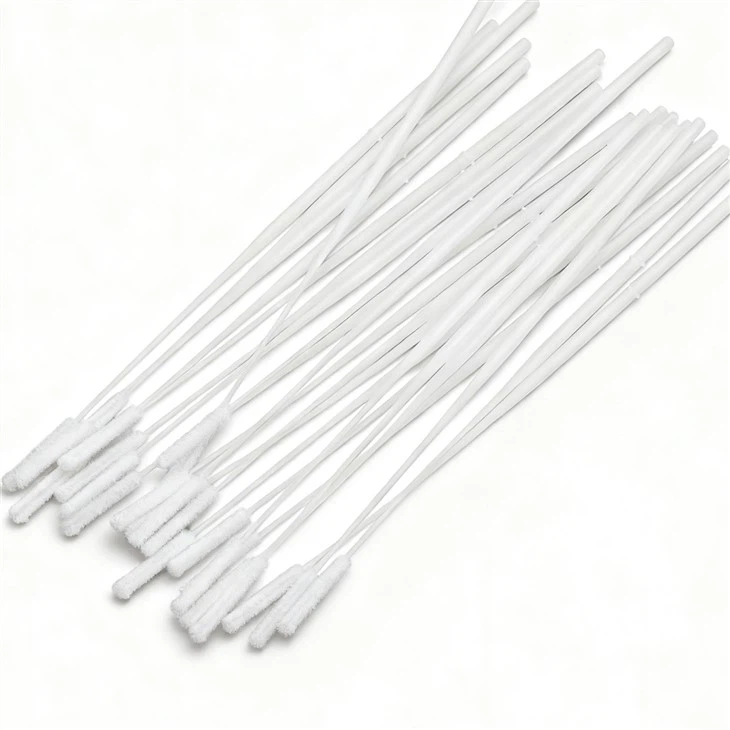
For our Sterile Flocked Swab, which is designed for accurate sample collection, we often use gamma irradiation. The flocked material is very sensitive, and gamma irradiation allows us to sterilize it without compromising its structure. This ensures that the swab can collect samples effectively and that the results of any tests performed on those samples are reliable.
Our Disposable Cervical Sampling Brush is made from materials that can withstand a bit more heat and pressure. So, in some cases, we use autoclaving to sterilize it. This method gives us the confidence that the brush is completely free of any contaminants, which is crucial when it comes to cervical sampling for early detection of diseases.
The Disposable Endometrial Suction Cannula is another product where we pay close attention to sterilization. Since it's used for internal medical procedures, we use a combination of methods. First, we might use a pre - treatment with a chemical disinfectant, and then follow it up with either EtO sterilization or gamma irradiation, depending on the specific requirements of the product.
Quality Control
After the swabs are sterilized, we don't just send them out into the world right away. We have a rigorous quality control process in place. We test a sample of the sterilized swabs to make sure that the sterilization was successful. This can involve things like culturing the swabs in a growth medium to see if any bacteria or fungi grow. If any growth is detected, we know that there's a problem, and we go back to the drawing board to figure out what went wrong.
We also keep detailed records of the sterilization process, including the temperature, pressure, time, and type of sterilization method used. This helps us ensure consistency in our production and allows us to trace back any issues if they arise.
The Future of Swab Sterilization
The field of swab sterilization is constantly evolving. There's a growing demand for more environmentally friendly and efficient sterilization methods. For example, some researchers are looking into using alternative gases or non - chemical methods like plasma sterilization. Plasma sterilization uses a high - energy gas called plasma to kill microorganisms. It's fast, effective, and doesn't produce harmful by - products.
As a swab supplier, we're always keeping an eye on these new developments. We want to be at the forefront of providing the highest - quality, safest swabs to our customers.
Contact Us for Your Swab Needs
If you're in the market for high - quality, properly sterilized swabs, we'd love to hear from you. Whether you're a medical laboratory, a research institution, or a healthcare provider, we have a wide range of swabs to meet your specific requirements. Our team of experts can help you choose the right swab and ensure that it's sterilized using the most appropriate method. So, don't hesitate to reach out and start a conversation about your swab procurement needs.
References
- Block, S. S. (2001). Disinfection, Sterilization, and Preservation. Lippincott Williams & Wilkins.
- Rutala, W. A., & Weber, D. J. (2004). Guideline for Disinfection and Sterilization in Healthcare Facilities, 2008. U.S. Department of Health and Human Services, Centers for Disease Control and Prevention.
- McDonnell, G., & Russell, A. D. (1999). Antiseptics and disinfectants: Activity, action, and resistance. Clinical Microbiology Reviews, 12(1), 147 - 179.