

What is the price range of human anatomy models?
Oct 10, 2025
Leave a message
When it comes to the field of medical education, research, and patient education, human anatomy models are invaluable tools. As a supplier of high - quality human anatomy models, I often receive inquiries about the price range of these essential educational aids. In this blog, I'll delve into the factors that influence the prices of human anatomy models and provide a general overview of the price ranges you can expect.
Factors Affecting the Price of Human Anatomy Models
Complexity of Design
One of the most significant factors determining the price of a human anatomy model is its complexity. Simple models, such as those that only show the basic structure of an organ or a single system, are generally less expensive. For example, a basic model of a heart that only shows the external shape and major blood vessels will cost less compared to a detailed heart model that can be dissected to reveal the internal chambers, valves, and the conduction system.
More complex models require more time and expertise to design and manufacture. The sculptors and designers need to ensure that every tiny detail is accurate, which often involves in - depth research and the use of advanced manufacturing techniques.
Material Quality
The materials used in the construction of human anatomy models also play a crucial role in their pricing. Models made from high - quality, durable materials will naturally be more expensive than those made from lower - grade materials.
For instance, some models are made from high - density plastics that are resistant to wear and tear, can withstand repeated handling, and maintain their shape over time. These plastics often have a smooth finish and a realistic texture, which enhances the learning experience. On the other hand, cheaper models may be made from thinner plastics or less - durable materials that are more prone to breakage.
In addition to plastics, some high - end models may incorporate other materials such as rubber for more realistic flexibility, or even metal components for added strength in certain parts.
Size of the Model
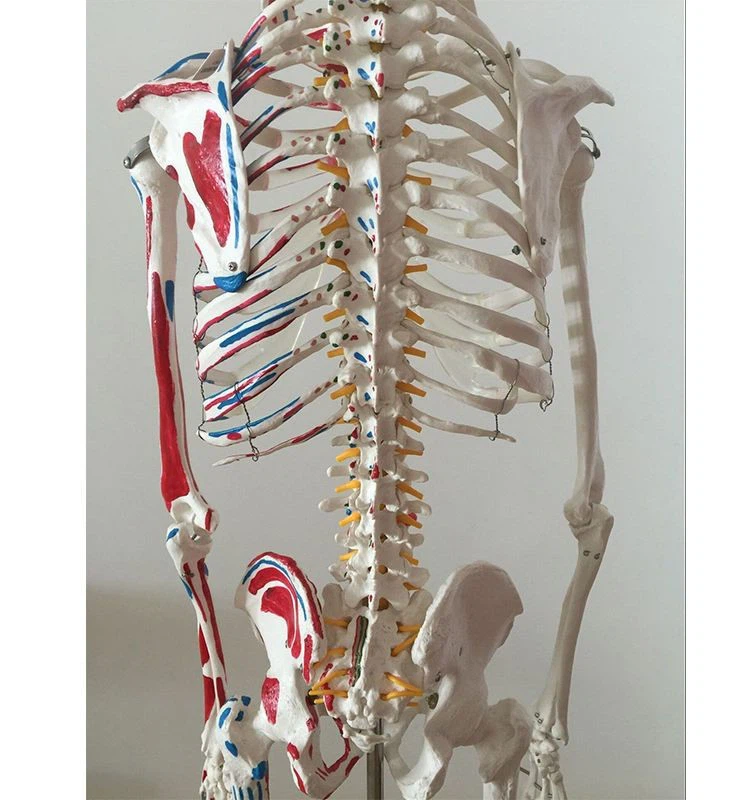
The size of the human anatomy model is another important factor. Life - size models, such as the Life Size Skeleton Anatomy Model, are typically more expensive than smaller, scaled - down versions. This is because they require more materials and more space during the manufacturing process.
Larger models also often need more complex handling and packaging to ensure they are not damaged during shipping. However, life - size models offer a more immersive and realistic learning experience, which can be essential for certain educational settings.
Functionality
Anatomy models with additional functionality are usually priced higher. For example, some models can be disassembled into multiple parts, allowing students to study the internal structures more closely. These dissectible models require more intricate design and manufacturing processes to ensure that the parts fit together precisely and can be easily assembled and disassembled.
Other models may come with interactive features, such as lights to highlight specific structures or electronic components that provide additional information about the anatomy. These advanced features add to the cost of the model but can greatly enhance the educational value.
General Price Ranges
Low - Cost Models ($10 - $50)
Low - cost human anatomy models are typically simple and small in size. They are often made from basic plastics and may have limited detail. These models are suitable for introductory level education, such as in primary or secondary schools, where the focus is on getting a general understanding of the human body.
For example, a small, non - detailed model of a single organ like a kidney or a lung can be found in this price range. These models are great for quick visual demonstrations and can help students get a basic idea of the shape and location of the organ within the body.
Mid - Range Models ($50 - $500)
Mid - range models offer a good balance between price and quality. They are usually made from better - quality materials and have more detailed features compared to low - cost models.
Many mid - range models are dissectible, allowing students to explore the internal structures of organs or systems. For example, a mid - range model of the digestive system may be able to be opened up to show the different parts of the alimentary canal and the associated organs.
This price range also includes some scaled - down models of larger systems, such as the Respiratory System Anatomy Models. These models are suitable for more in - depth study in high schools, vocational training programs, and some entry - level college courses.
High - End Models ($500 and above)
High - end human anatomy models are designed for professional use in medical schools, research institutions, and advanced training programs. These models are often life - size or highly detailed, and they may incorporate advanced materials and technologies.
For example, a high - end model of the urinary and reproductive systems, like the Urinary Reproductive and Pregnancy System Model, may show the complex anatomical relationships during pregnancy and have features such as removable parts for detailed study.
These models are also more likely to be accompanied by detailed documentation, educational resources, and even warranties. The high price reflects the high level of precision, realism, and functionality that they offer.
Conclusion
The price range of human anatomy models varies widely depending on factors such as complexity, material quality, size, and functionality. Whether you are a school teacher looking for an affordable model for your classroom, a medical student in need of a detailed and accurate model for your studies, or a researcher requiring a high - end model for your work, there is a human anatomy model available to suit your needs and budget.

If you are interested in purchasing human anatomy models for your educational institution, research facility, or any other purpose, I encourage you to reach out to discuss your specific requirements. We have a wide range of models in different price ranges, and our team of experts can help you select the most suitable models for your needs.
References
- Thibodeau, G. A., & Patton, K. T. (2019). Anatomy & Physiology. Elsevier.
- Tortora, G. J., & Derrickson, B. H. (2017). Principles of Anatomy and Physiology. Wiley.