

What is the working principle of a distillation apparatus made of laboratory glassware?
Dec 01, 2025
Leave a message
Hey there! As a supplier of laboratory glassware, I've been getting a lot of questions lately about the working principle of a distillation apparatus made of laboratory glassware. So, I thought I'd take a few minutes to break it down for you in a way that's easy to understand.
First off, let's talk about what distillation is. Distillation is a process used to separate mixtures based on differences in their boiling points. It's a pretty common technique in chemistry labs, and it's used for all sorts of things, from purifying water to making alcohol.
The basic components of a distillation apparatus made of laboratory glassware typically include a Borosilicate Glass Erlenmeyer Flask, a distillation column, a condenser, and a receiving flask. Let's take a closer look at each of these components and how they work together.
The Borosilicate Glass Erlenmeyer Flask
The Borosilicate Glass Erlenmeyer Flask is where the mixture to be distilled is placed. Borosilicate glass is a great choice for this because it's resistant to thermal shock, which means it can withstand rapid changes in temperature without breaking. This is important because during the distillation process, the flask will be heated, and then the vapor will be cooled in the condenser.
The Erlenmeyer flask is also shaped in a way that makes it easy to mix the contents and prevent splashing. It has a narrow neck, which helps to control the flow of vapor into the distillation column.
The Distillation Column
The distillation column is a long, vertical tube that sits on top of the Erlenmeyer flask. Its main job is to provide a surface area for the vapor to condense and re - evaporate multiple times. This process, called fractional distillation, helps to separate the components of the mixture more effectively.
Inside the distillation column, there are often packing materials, such as glass beads or metal mesh. These packing materials increase the surface area available for the vapor to interact with, which improves the separation efficiency. As the vapor rises through the column, the components with higher boiling points will condense and flow back down into the flask, while the components with lower boiling points will continue to rise towards the condenser.
The Condenser
The condenser is where the vapor is cooled and turned back into a liquid. There are different types of condensers, but a common one is the Liebig condenser. It consists of a long, straight glass tube surrounded by a water jacket. Cold water is circulated through the water jacket, which cools the vapor inside the glass tube.

As the vapor cools, it condenses into a liquid and drips down into the receiving flask. The condenser is crucial for collecting the distilled product. Without it, the vapor would just escape into the air, and we wouldn't be able to separate the components of the mixture.
The Receiving Flask
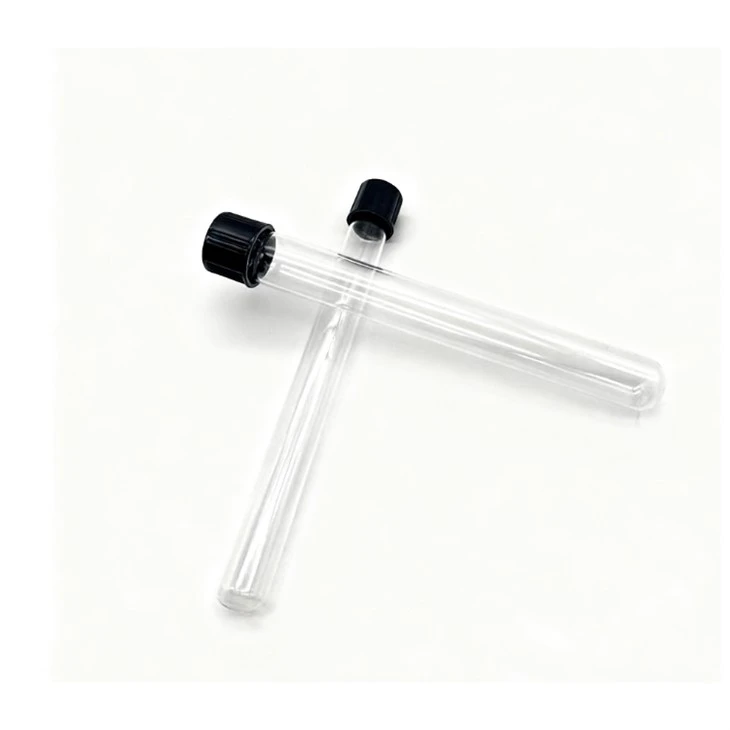
The receiving flask is where the distilled liquid is collected. It's usually a simple glass flask, like a Hand Watch Glass or a Glass Tube with Screw Cap, depending on the volume and nature of the distilled product.
Now that we've covered the basic components, let's go through the step - by - step process of how a distillation apparatus works.
- Loading the Mixture: First, the mixture to be distilled is poured into the Borosilicate Glass Erlenmeyer Flask. The flask is then placed on a heating source, such as a hot plate or a Bunsen burner.
- Heating the Mixture: As the mixture is heated, the components with the lowest boiling points will start to vaporize first. The vapor rises up into the distillation column.
- Fractional Distillation in the Column: Inside the distillation column, the vapor condenses and re - evaporates multiple times. This process separates the components based on their boiling points. The components with lower boiling points continue to rise towards the condenser, while the higher - boiling - point components fall back into the flask.
- Condensation in the Condenser: When the vapor reaches the condenser, it is cooled by the cold water in the water jacket. The vapor condenses back into a liquid and drips down into the receiving flask.
- Collection of the Distilled Product: The distilled liquid collects in the receiving flask. Depending on the complexity of the mixture, you may need to collect different fractions at different times to get pure components.
There are a few things to keep in mind when using a distillation apparatus. First, it's important to control the heating rate. If you heat the mixture too quickly, the separation may not be as effective, and you may end up with a less pure product. Second, make sure the condenser is properly cooled. If the water flow in the condenser is too slow or the water is too warm, the vapor may not condense completely.
As a laboratory glassware supplier, I know how important it is to have high - quality glassware for your distillation experiments. Our Borosilicate Glass Erlenmeyer Flasks are made from top - grade borosilicate glass, which ensures durability and resistance to thermal shock. Our Hand Watch Glasses and Glass Tubes with Screw Caps are also designed to meet the needs of your distillation processes.
If you're in the market for laboratory glassware for your distillation apparatus or any other lab needs, I'd love to talk to you. Whether you're a small research lab or a large educational institution, we can provide you with the right glassware at a competitive price. Just reach out, and we can start discussing your requirements.
References
- Brown, T. L., LeMay, H. E., Bursten, B. E., & Murphy, C. J. (2012). Chemistry: The Central Science. Pearson.
- Skoog, D. A., West, D. M., Holler, F. J., & Crouch, S. R. (2013). Fundamentals of Analytical Chemistry. Cengage Learning.