


How to Choose the Right Pipette Tips for Accurate Laboratory Results
Oct 29, 2025
Leave a message
For any laboratory, accuracy and precision begin with the simplest consumable - the pipette tip. Whether you are working in a clinical lab, biotech company, or academic research center, pipette tips directly affect the reproducibility of your results.
However, not all pipette tips are created equal. Choosing the right one depends on several factors such as material, compatibility, design, and sterility level.
This article will help laboratory buyers, distributors, and OEM partners understand how to select the ideal pipette tips for their specific applications - and why working with a trusted supplier like OptiMedvo can ensure reliability and consistent quality.
Why Pipette Tips Matter in Laboratory Accuracy
A pipette tip is the physical interface between your liquid sample and the pipette. Even a small variation in tip design or material can lead to inconsistent liquid handling, cross-contamination, or loss of accuracy.
For laboratories handling sensitive assays - such as qPCR, ELISA, or cell culture - choosing the right pipette tip can reduce sample waste and prevent experimental errors.
Key performance factors include:
Liquid retention and surface smoothness
Tip-to-pipette fit and air-tight sealing
Resistance to bending or static charge
Manufacturing precision and cleanliness
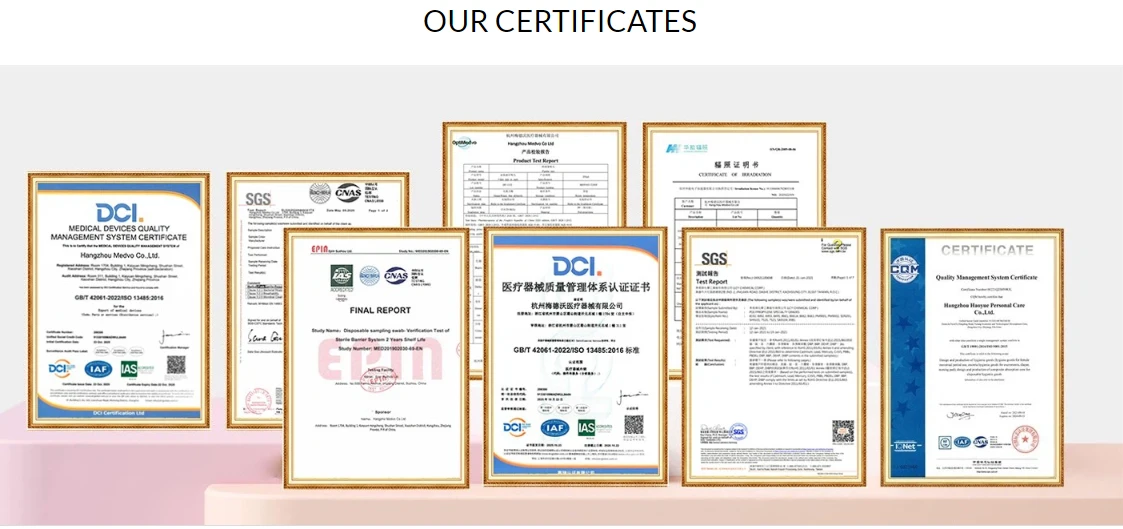
OptiMedvo's pipette tips are designed and manufactured under ISO 13485-certified facilities, ensuring high precision molding, uniform dimensions, and excellent fit with global pipette brands.
Types of Pipette Tips and Their Applications
To choose effectively, it's important to understand the main types of pipette tips available:
a. Standard Pipette Tips
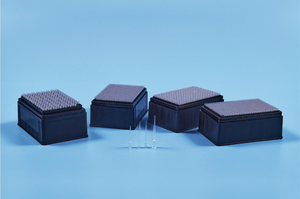
These are the most common and cost-effective choice for general laboratory use. Suitable for routine liquid transfers and compatible with most single- and multi-channel pipettes.
b. Low-Retention Pipette Tips
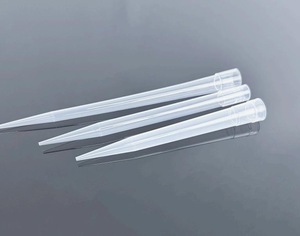
Low-retention tips are treated with a hydrophobic coating that minimizes liquid residue inside the tip. They are ideal for handling viscous or precious samples, such as DNA, proteins, or enzymes.
Benefits:
Higher accuracy for small-volume pipetting
Reduced sample loss
Improved reproducibility

c. Filter (Barrier) Pipette Tips
These tips include an internal filter that prevents aerosols or liquids from entering the pipette shaft - essential for contamination control in PCR and molecular biology.
Applications: qPCR, RNA/DNA extraction, microbiology, and clinical diagnostics.

d. Sterile and Non-Sterile Tips
Sterile tips are gamma-irradiated and DNase/RNase-free, ideal for sensitive experiments.Non-sterile tips are used in non-critical applications such as buffer transfers or solution mixing.

Compatibility: Matching the Tip to Your Pipette
Compatibility is one of the biggest concerns for buyers. A tip that doesn't fit properly can cause leaks, inaccurate volumes, or even damage the pipette.
Universal-fit tips are designed to match most global pipette brands such as Eppendorf, Gilson, Thermo Fisher, Sartorius, and Rainin. OptiMedvo manufactures universal and OEM-customized tips, ensuring perfect fitting and air-tight sealing.
Tip for B2B buyers: When ordering in bulk, request compatibility testing reports from your supplier to verify tip fit and dimensional consistency.
Material and Manufacturing Quality
Most high-quality pipette tips are made from virgin polypropylene (PP) - a material that is chemical-resistant, autoclavable, and non-reactive.
Important quality points:
No recycled materials: ensures purity and dimensional stability
DNase/RNase-free certification: prevents nucleic acid degradation
Precision molding: guarantees smooth inner walls and consistent volume accuracy
Clean-room production: minimizes particle contamination
OptiMedvo uses 100% virgin polypropylene in its tips, molded in Class 100,000 cleanrooms, ensuring sterility and lot-to-lot consistency.
Volume Ranges and Packaging Options
Pipette tips come in various volume capacities, such as:
0.1–10 µL
10–100 µL
100–1000 µL
1–5 mL (macro tips)
For high-throughput labs, racked tips or refill systems improve workflow efficiency.Bulk packaging is ideal for cost-sensitive buyers, while sterile racks are preferred for contamination control.
OptiMedvo offers bulk bags, racked, and refill system packaging options, along with OEM private labeling for global distributors.
How to Evaluate Pipette Tip Quality Before Purchase
Before placing a bulk order, buyers should check the following quality indicators:
✅ Visual clarity: ensures no molding defects
✅ Smooth inner surface: prevents sample retention
✅ Firm but flexible fit: allows secure attachment
✅ Leak-free performance: verified through test pipetting
✅ Certificate of Analysis (COA): confirms sterility and quality
OptiMedvo performs strict quality inspection for every production batch - including dimensional accuracy tests and air-tightness validation.
👉 Contact us today to request free samples or learn more about our OEM pipette tip solutions.