


Revolutionizing Ophthalmology Training: How High-Fidelity Anatomy Models Are Shaping 2026 Surgery
Jan 19, 2026
Leave a message
In 2026, the global medical simulation market is projected to reach $4.5 billion, with specialized surgical training-particularly in ophthalmology-witnessing the fastest growth. As cataract and vitreoretinal surgeries become more common in aging populations, the transition from "theory" to "operating room" is being bridged by a new generation of high-fidelity anatomical models.
At Optimedvo, we provide the precision tools that allow medical institutions to move beyond traditional textbooks and into high-stakes practical simulation.
Reducing the Learning Curve by 30%
The traditional "see one, do one, teach one" model is being replaced by "proficiency-based progression." Recent data from surgical residency programs in 2025 indicates that residents who train with high-fidelity physical models before their first live surgery show a 30.5% improvement in manual dexterity and a 25% reduction in procedural time.
The Data: Studies on ocular surgery simulators show that repeated practice on physical models reduces the risk of posterior capsule rupture-a common complication in cataract surgery-by nearly 40% during a surgeon's first 50 live cases.
Optimedvo's Contribution: Our Ophthalmology Models are designed to replicate the specific resistance and haptic feedback of human ocular tissue, providing the "tactile memory" necessary for micro-incisions.
Bio-Fidelity: More Than Just Plastic
In 2026, a model's value is measured by its Bio-fidelity Index. Low-cost, generic models often fail because their material density does not match real biological tissue, leading to "false training."
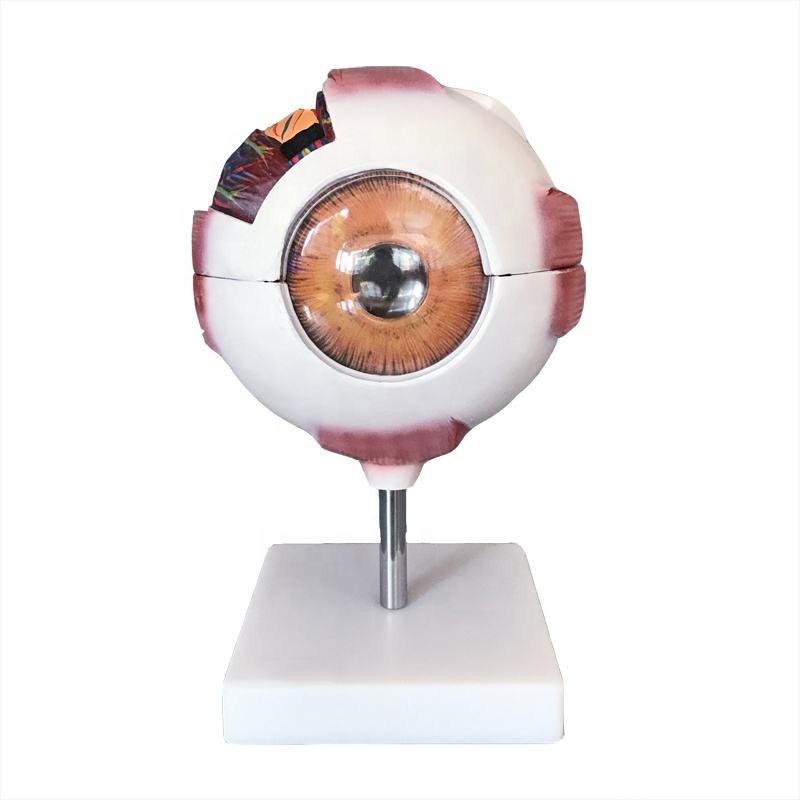


Product:Eyes & Ear Models
Place of Origin:Zhejiang, China
Subject:Medical Science
Model Number:MDV-A007
Brand Name:Optimedvo
Application:Medical School,Clinical
Technical Precision: Optimedvo's Animal Anatomy Models and human eye replicas utilize multi-layered polymer technology. This mimics the distinct layers of the eye-from the cornea to the retina-allowing trainees to practice delicate tasks like suturing or IUD (Intraocular Device) placement with realistic tissue tension.
Standardization: Unlike cadaveric tissue, which varies in quality and poses biohazard risks, our models provide a standardized training baseline. This allows educators to grade students on a consistent platform, ensuring every trainee meets the same 2026 competency benchmarks.
Cost-Effectiveness in Global Medical Education
For medical universities and hospital training centers, the "cost-per-trainee" is a critical metric. In 2025-2026, the shift toward reusable and modular models has significantly optimized training budgets.
The Data: Implementing high-fidelity models can reduce the reliance on expensive wet labs (animal or human tissue labs) by up to 50%, saving institutions an average of $15,000 to $20,000 per training cycle in biohazard disposal and tissue procurement costs.
Scalability: Optimedvo's models are built for durability. A single model can be used for dozens of demonstrations, making it a sustainable investment for institutions in both developed and emerging markets.
Conclusion: Engineering the Surgeons of Tomorrow
As surgical technology advances toward robotic assistance and AI-guided procedures, the fundamental need for anatomical mastery remains. Optimedvo stands at the intersection of medical accuracy and educational innovation, providing the high-definition models that ensure the next generation of ophthalmologists is "theatre-ready."